


My hands started to shake. Bad timing. I was thirty seconds into performing a piece of music I had no business trying to perform. I was on stage, alone. Four judges sat about 15 feet away, watching me intently, barely visible through the glare from the stage lights. Which were all pointed at me. No pressure.
I was performing for what’s called a jury. For a music college student, a jury is an end-of-semester ritual that’s basically a final exam for your private lessons on your primary instrument. Mine was classical guitar.
This was my first semester (and jury) at a new university. I’d just transferred in from a small community college into an elite music program. This was a “real” music school, where the person in the next practice room had probably been playing since age five. And they sounded like it.
I nailed the first two pieces. So far so good. Then came the third and final piece. I’d chosen it to prove (in hindsight, mostly to myself) that I belonged at this school. It was a difficult piece, above my ability on paper, but one I believed I could pull off through sheer hours of practice and grinding. My teacher had warned me about playing it, but I insisted.
When the first mistake came, I wasn’t really surprised. It was during a fast run I could never quite nail in practice. It was just a few fumbled notes at the end that any normal human probably wouldn’t have noticed, but I knew damn well the judges did.
That’s when the nerves set in.
The human body is a curious thing. At the first hint of danger, your sympathetic nervous system kicks in and floods your blood with adrenaline. One rude, inconvenient side effect: it makes your hands shake. Adrenaline is great for outrunning a bear. The shaking hands come free, whether you need them or not.
Another tricky section. My hands were shaking even worse now, and no matter how many deep, calming breaths I took, I wasn’t going to overcome a million years of evolution.
Then the predictable happened. More hand shaking meant a few more missed notes. A pause that lingered too long. A section where my fingers seemed to forget where they belonged entirely. I even had to restart a passage: the kiss of death in a performance.
After a traumatic event, the body doesn’t immediately return to baseline. Chemicals in the blood have been deployed, biological processes have been activated, and it takes a while for the system to settle. The upside was that I was too wired to feel the full weight of what just happened. The shame and anger would come later. For now, I managed a few sheepish grins and made my way out.
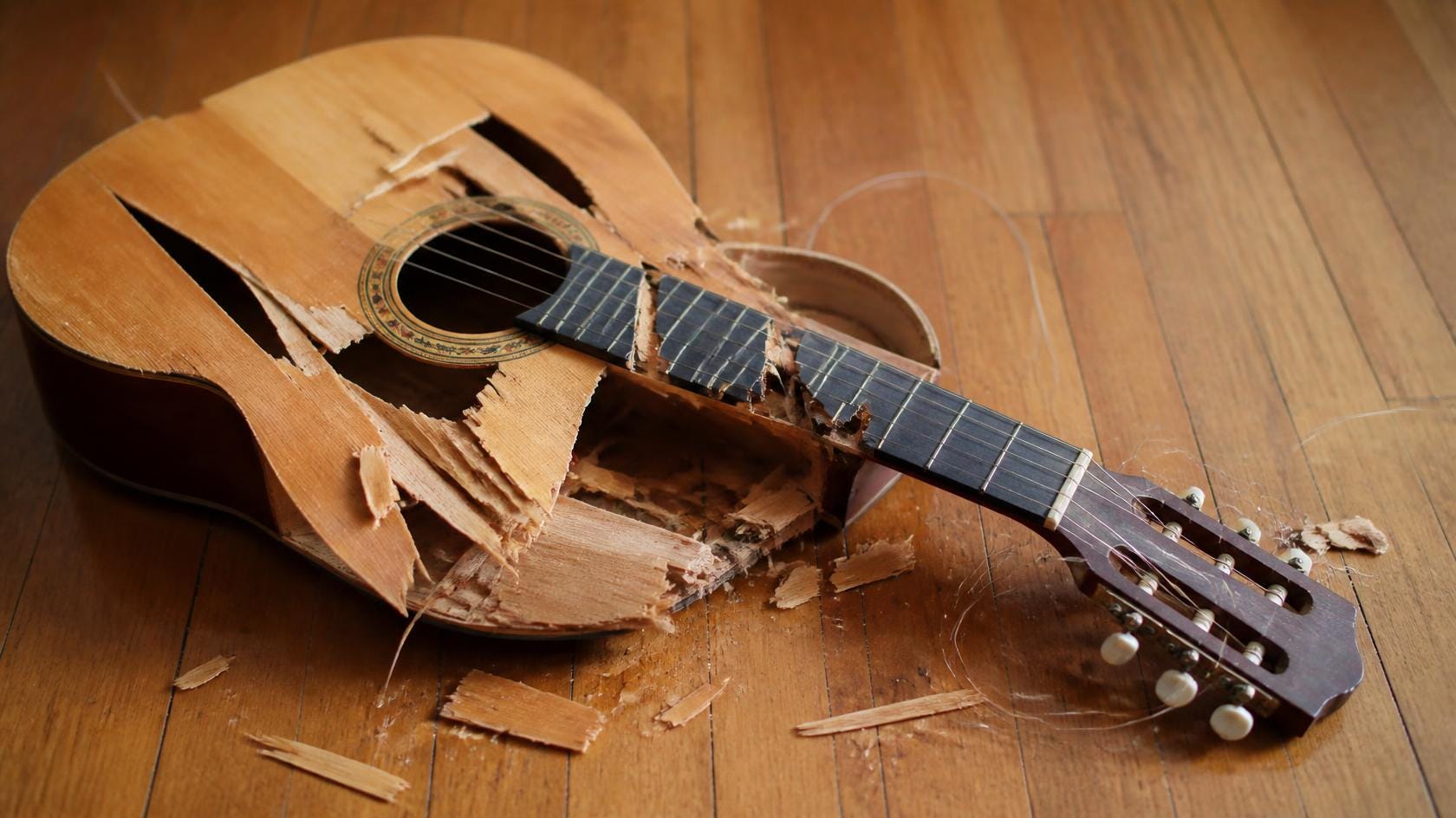
I leaned on the railing outside the second-floor recital hall and looked down at the common area below. Hundreds of students crisscrossed it, hustling to their next class, instrument cases in hand. On any other day, that view thrilled me: all those serious, determined musicians, and I was one of them. Today, I felt like I was watching them from the outside.
My initial shock had finally faded, replaced by anger and frustration. “What the hell had just happened in there?” I kept asking myself. My teacher had warned me about this piece, but I didn’t listen. Maybe I didn’t belong here after all.
One of the judges, a grad TA, found me outside, staring aimlessly over the railing. “You okay?” he asked. “I don’t get it,” I said. “I practiced that piece for months. I couldn't have put in more hours if I tried.”
He thought for a moment, then said something I never forgot: “Well, always remember that practice doesn’t make perfect. Perfect practice makes perfect. Just slow down, and make sure you’re not practicing wrong.” 1
I wish I could say that, in the moment, his advice sparked some profound insight in me. That the clouds parted, I heard angels singing, and the path forward was clear. But right then, I was too frustrated and self-absorbed to listen. Mostly, I just wanted to go home, be embarrassed, and figure out what the hell went wrong.
“Slow down,” I muttered to myself. “What the hell does he know?!”
But his words burrowed into the back of my mind. I couldn’t shake the feeling he was right. “Slow down!?” Up to that point, my default strategy had been to always play faster, more challenging pieces. In the last few months, I had been exposed to classical guitar music I didn’t even know existed, and I was eager to learn these new, exotic, and often very difficult pieces.
Slow down!
A few nights later, I was still mulling over the TA’s comments. Unable to sleep, I finally got out of bed, picked up the guitar, mic’d and recorded myself, and listened back. And, for the first time, I actually listened, critically. Just like I would to one of my own students. It was rough. And humbling. Zero stars, wouldn’t recommend.
But it was obvious why I’d bombed. Even when I played that first passage comically slow, it still didn’t sound clean. I'd wired in bad form, and every wrong repetition had wired it in deeper.
All those hours pushing through sore hands and aching wrists, and I'd paid for my mistakes twice: once to learn them, and now to unlearn them. I didn't need fewer reps. Nobody gets really good at an instrument without grinding through more hours than any sane person would sign up for. I just needed to know which ones were actually doing anything.
I went into research mode and headed to the university library. This was the mid-90s. No Google, no YouTube, no online ‘learning hacks,’ no ‘5 weird tricks,’ and definitely no handy phone apps. Just books. So. Many. Books. My degree minor was music education, so I started there. I wandered the stacks for what felt like hours, sifting through countless books on music pedagogy techniques for children and adults.
I wasn’t sure exactly what I was looking for, but it became clear I wouldn’t find it in these books. Sorry, Gordon and Kodály, audiation and solfège weren’t going to cut it.
I finally broke down and asked a librarian (the unsung hero of this story). I tried to explain what I needed. “Umm… I sorta bonked a performance, and I want to find books about how to get really good at guitar in the most efficient way possible” was about all I could come up with.
She thought for a second. “You know,” she said, “I just came across something that might help.” She disappeared for what seemed like an eternity, but finally came back with Dr. Anders Ericsson’s seminal study: “The Role of Deliberate Practice in the Acquisition of Expert Performance.”
“Bingo. Holy shit… This is exactly what I’m looking for. Has this been here all along?! Even the title was perfect: “blah blah blah Expert Performance!”
Ericsson had studied violinists at an elite Berlin academy. The best players, the ones headed to elite orchestras around the world or illustrious solo careers, had practiced far more than their peers. About 7,400 hours alone by age eighteen, against 3,400 for the students headed into teaching.
But the raw hours spent practicing weren’t his main argument. Repetition can make a skill automatic, but it stops paying dividends pretty quickly. Erricson found that what keeps paying dividends is deliberate practice: focused work on one aspect of performance, with a specific goal, immediate feedback, correction, and another attempt just past what you can already do.
Ten thousand hours of easy repeats doesn’t make you an expert. It just makes you very good at doing the wrong thing. 2
That was my mistake, right there. All those hours, and not one of them checked against anything. I’d picked a piece nobody had signed off on, then drilled it alone, night after night, running the wrong technique until it felt normal. Hard work, pointed in the wrong direction.
The next time I sat down to practice, I didn’t play the entire piece like I usually did. I played just four measures. The same four measures that had first tripped me up in the jury. I slowed it down until it felt ridiculous, with a metronome, and didn’t stop until the transition stopped falling apart.
Rewiring bad technique is brutally repetitive. And although I was still grinding and putting in the hours, at least now my efforts were focused on what actually mattered.
Importantly, I stopped practicing the parts I already knew; aka, the easy stuff. Those were the fun parts, but they were doing nothing for me. I recorded myself and listened back, which I hated every single time, but which caught things I had been missing for months. Tension. Rushing. A fingering that had never once worked and that I'd repeated a thousand times anyway.
From then on, I built every practice session around deliberate practice. I learned a few lessons along the way:
It’s exhausting. It’s not for every practice session. Like physical exercise, you can’t do high-intensity sprints every session, day after day. You will burn out.
Short sessions beat marathons. Twenty focused minutes do more than two hours on autopilot.
Have a goal for each session. The best in-session goals I found were narrow, measurable, and extremely specific. “I will play measures 84-90 cleanly, with no mistakes, at 110 beats per minute, five times in a row before moving on.”
Slow and accurate beats fast and sloppy every time.
Get feedback. Seek out input from others when possible. On that note…
You can’t fix what you can’t hear or see. If available, record yourself.
What you track, you improve. A workout log shows a lifter when they're ready to add weight. A practice log can do the same for tempo.
I wish I could end this story on a clear, triumphant note. Or describe a Rocky-style montage where I’m heroically blasting past my performance demons (with a flamethrower guitar, of course) to defeat the big bad in the grand finale. But getting really good at something is hard and messy, requires real sacrifices, and takes a lot of time, mostly spent alone. Progress isn’t linear, and sometimes it’s barely noticeable.
Here's what I can tell you: I never bombed like that again. Not in a jury, not in a recital, and not in a performance. And what I learned in that library stopped being a guitar thing and eventually became how I approached anything hard.
Years later, I realized I'd left that library with only one piece of the puzzle. Deliberate practice fixed how I practiced. But the best techniques in the world don't mean squat if your schedule runs on vibes. And none of it matters if you never put your work in front of people. As Steve Jobs put it, real artists ship.
Those three pieces eventually became Rapid Mastery. Subscribe and I’ll show you what I found.

The line is often credited to Vince Lombardi. Whether he said it first, I don't know. That day was the first time I heard it, and it stuck.
Years later, Malcolm Gladwell took Ericsson’s research and turned it into the “10,000-Hour Rule.” The implication was that if you put in 10,000 hours, you can master anything. But that’s not what Ericsson was arguing, and he spent much of the rest of his career trying to correct the record (he died in 2020).